

You are comparing a red light panel, an infrared sauna, and an infrared heating pad. All three descriptions mention light or infrared energy. Does that make them interchangeable?
Understanding the terminology helps you choose the experience you actually want.
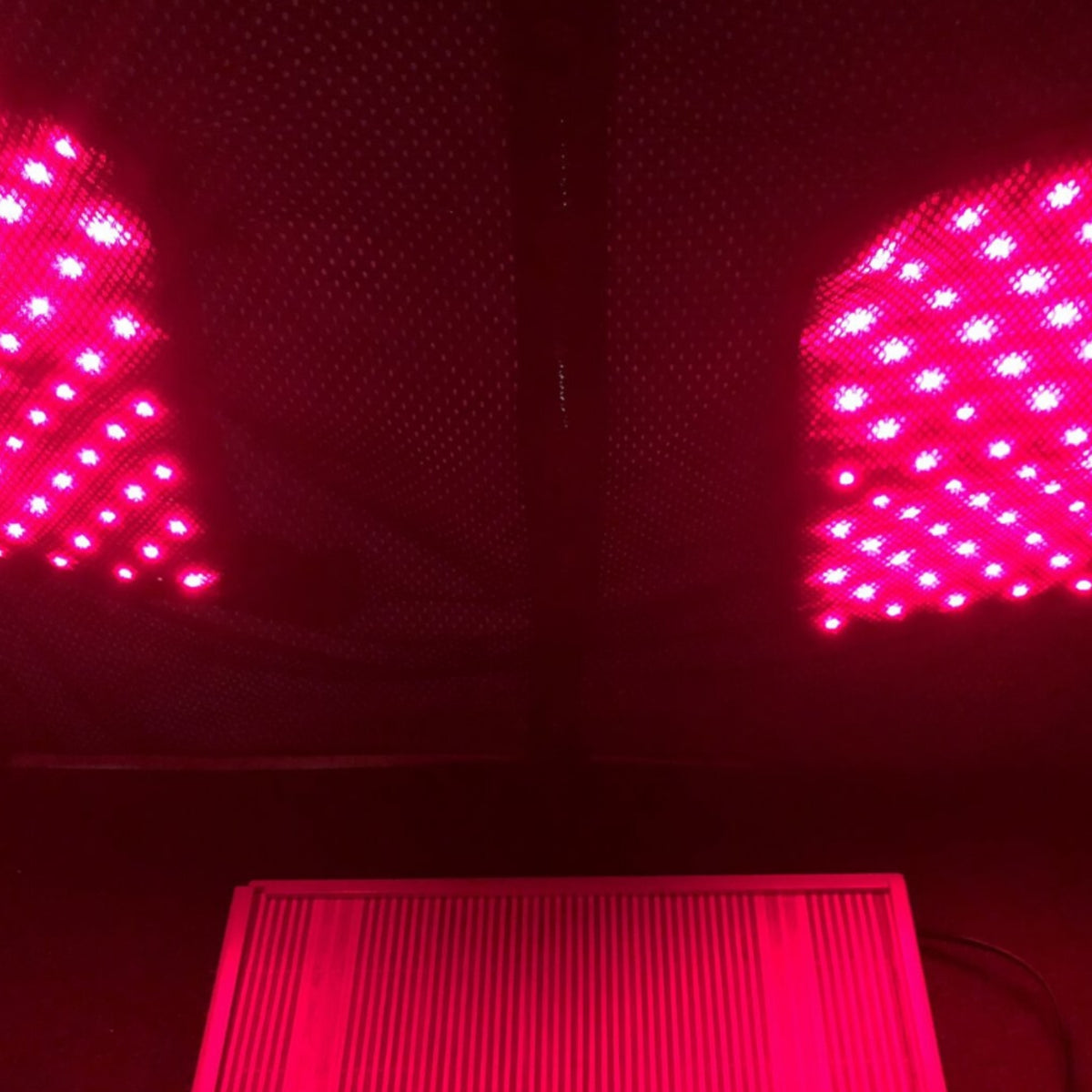
Red light is visible light. Near-infrared sits beyond the visible red portion of the spectrum. Infrared heating describes equipment designed to provide warmth. A red or near-infrared light device and an infrared sauna may use related parts of the spectrum, but they do not automatically deliver the same exposure or benefit. NASA's explanation of infrared.
First separate the spectrum from the purpose
The electromagnetic spectrum describes different kinds of radiation by wavelength. Red and infrared refer to regions of that spectrum. They do not, by themselves, specify what a device is designed to do.
NASA explains that infrared includes different regions and that not all infrared is experienced in the same way as heat. Infrared waves.
For a home wellness purchase, ask two separate questions: what does the device emit, and what is the intended purpose of that exposure?
That distinction prevents a category word from doing too much work. “Infrared” alone cannot tell you whether you are buying a light-based device, a heated surface, or a whole-body heat environment.
Compare the intended experience
Approach |
What to look for |
What to avoid assuming |
|---|---|---|
Red light device |
Wavelengths, intended use, output information, positioning, and instructions |
A visible red glow proves a therapeutic dose |
Near-infrared light device |
Specified wavelengths and the same exposure details |
Invisible output means the device is inactive |
Infrared sauna |
Heating design, controls, seating, enclosure, and use guidance |
Lower air temperature makes all routines equivalent |
Infrared heating pad |
Heated area, surface design, temperature control, and permitted positions |
Every infrared pad has the same performance |
This comparison is about product selection. It is not a ranking of which approach works best for a medical condition.
Why light exposure is more than a wavelength
In photobiomodulation research, wavelength is one part of a larger set of variables. Power density, time, pulse characteristics, and treatment timing also matter. Huang and colleagues.
Think of a wavelength claim as the beginning of a description. To evaluate a device, you still need to know how it is used, where the light is delivered, and what supporting evidence applies to that exposure.
A study about a clinical treatment cannot be recreated simply by finding the same wavelength on a shopping page. Ask how the other relevant conditions compare.
Why a sauna feels different
A sauna is designed around heat exposure. You choose a setting, sit within an enclosure or room, and follow instructions for the session. Infrared saunas generally use lower ambient temperatures than traditional saunas. Mayo Clinic.
If your goal is a warm, quiet pause, that experience may be central to your decision. If your goal is a particular light-based application, ask whether the device is designed and supported for it.
Some wellness products combine components. When they do, evaluate the heating and light functions separately before assuming the combination has an additional proven benefit.
What about an infrared heating pad
A pad offers a localized experience with its own surface, controls, and positioning requirements. Its suitability depends on those features and the instructions for use.
A term such as “deep heat” is not a complete measurement. Ask what the manufacturer means and whether the statement describes temperature, energy delivery, or a clinical result. Those are different claims and require different evidence.
Also check whether a product includes additional components such as red LEDs or PEMF. Their inclusion should not blur the basic questions of comfortable fit, appropriate use, and support for each claimed benefit.
Use your goal to narrow the choice
Start with the problem you want to solve, then move to the category:
- If the obstacle is making time for a whole-body heat routine, compare sauna formats and ownership requirements.
- If you want to explore a specific light-based application, compare relevant devices and evidence for that application.
- If you want localized warmth, compare heating surfaces, controls, and permitted use positions.
These are starting points for investigation, not treatment prescriptions. For persistent pain or a diagnosed condition, your clinician can help decide which options are relevant.
How Therasages categories fit
Therasage offers a portable sauna, the Tri-Lite red light panel, and infrared heating pads. They are different formats to evaluate against your needs.
Read the current user guides for any model you are considering. Product names alone cannot substitute for instructions or establish that one format will reproduce another's results.
Frequently asked questions
Can I see near infrared light
Near-infrared lies beyond the visible spectrum. A lack of visible glow is not a reliable way to judge whether an infrared emitter is working. Use the manufacturer's approved checks. NASA.
Is an ordinary red bulb a therapy device
A red appearance alone does not establish appropriate output, intended use, or supporting evidence. Evaluate the actual device rather than its color.
Is warmth proof that red light therapy is working
Warmth does not establish a specific clinical outcome. Follow the instructions and assess the intended benefit using an appropriate method.
Should I use several technologies together
More components do not automatically create a better routine. Check the instructions and suitability of the combined use instead of combining independent schedules yourself.
Good information should leave you with fewer confusing labels and better questions. We are here to help you understand the options that fit your life.
References
1. NASA Science. Infrared waves.
2. Huang YY, et al. Biphasic dose response in low level light therapy. 2009.
3. Mayo Clinic. Do infrared saunas have any health benefits?
4. Therasage. User guides. Manufacturer information for individual product operation.