

When your knee aches on the stairs or your neck feels sore at the end of the day, “may support comfort” is not the answer you need. You want to know whether red light therapy can actually reduce pain—and whether a study on a clinic laser says anything useful about the flexible panel in your home.
Photobiomodulation has reduced pain in some trials and reviews for specific conditions, including some neck-pain and knee-osteoarthritis protocols. Results are not consistent across every condition or device. Wavelength, energy dose, treatment site, timing, and diagnosis matter, so evidence for one protocol cannot prove that any red-light product will relieve any pain. Chow and colleagues, 2009.
That is a more modest answer than the internet often offers. It is also a more helpful starting point for deciding whether light belongs beside—not instead of—appropriate evaluation, movement, rehabilitation, or medical care.
Start by naming the pain problem
“Pain” includes acute sprains, osteoarthritis, nerve pain, tendon problems, headaches, postsurgical pain, and unexplained symptoms. These do not share one cause or one evidence base. A paper about knee osteoarthritis cannot validate treatment for a new back injury. A result after a clinician-applied laser does not automatically apply to a consumer LED panel.
Before reaching for a device, ask: Where is the pain? When did it begin? Was there an injury? Is it getting better, stable, or worse? What has a clinician diagnosed? If the answer is “I do not know,” red light should not become a substitute for finding out.
Seek urgent care for chest pain, sudden weakness or numbness, loss of bladder or bowel control, major trauma, a hot swollen joint with fever, or severe pain with other alarming symptoms. New, persistent, or worsening pain deserves appropriate assessment.
What condition specific reviews have found
A 2009 systematic review and meta-analysis included 16 randomized trials of low-level laser therapy for acute or chronic neck pain. The authors reported better short-term improvement than placebo for acute pain and a reduction in chronic neck pain immediately after treatment, with effects persisting in some studies. The review also included varied doses and small trials; an independent evidence summary urged caution about potential bias and incomplete adverse-event reporting. PubMed abstract and Centre for Reviews and Dissemination summary.
For knee osteoarthritis, a 2019 review pooled 22 placebo-controlled trials with 1,063 participants. Pain and disability improved overall, and dose-specific analyses favored protocols matching recommended treatment doses. Heterogeneity was high, meaning results varied substantially between trials. The authors’ favorable conclusion therefore belongs to particular wavelengths and doses, not to “red light” as a universal category. Stausholm and colleagues, 2019.
There are also contrary reviews. A 2015 knee-osteoarthritis meta-analysis concluded that available evidence did not support effectiveness. Differences in which studies were included, how dose was handled, and how data were pooled help explain why two reviews can point in different directions. Huang and colleagues, 2015.
The honest takeaway is not that research is useless. It is that the details determine whether a result travels.
Laser studies and LED products are related not identical
Photobiomodulation research includes lasers and LEDs, red and near-infrared wavelengths, contact and non-contact methods, and very different irradiances. Researchers describe dose using variables such as power, treatment area, time, and joules delivered. Two devices that both glow red can deliver very different exposures.
A home panel may be convenient for a broader area, while a clinical laser may deliver a specified dose to precise points. Neither format is automatically “better”; they are simply not interchangeable without supporting data. Product brightness to the eye also does not tell you the dose reaching the target tissue.
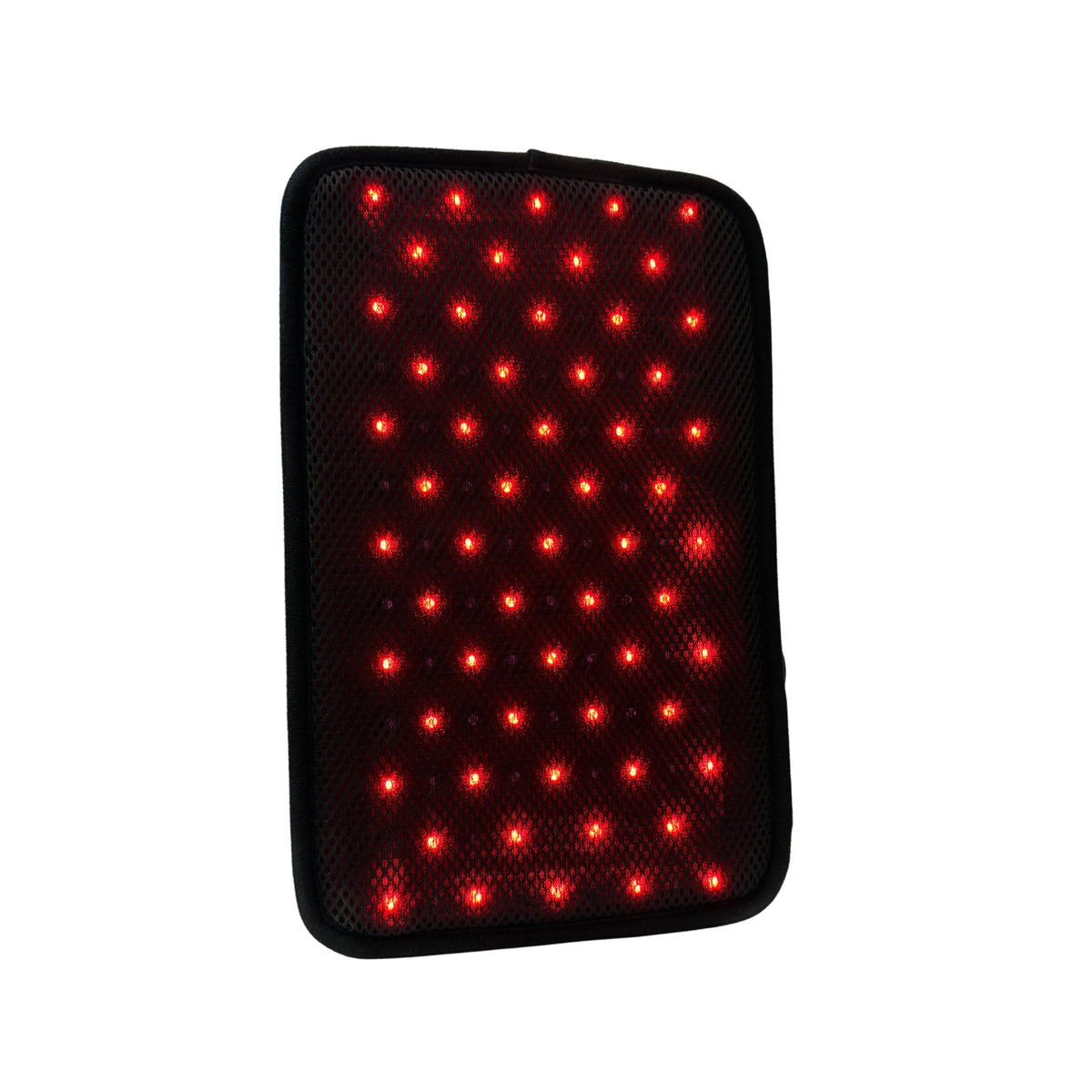
The current Therasage Tri-Lite page identifies a compact 9 by 13.5 inch flexible LED panel using red and near-infrared light, with a controller and instructions for targeted face or body use. Those details help a customer understand the product. They do not show that the panel reproduced the neck-pain or knee-osteoarthritis trials above.
A practical way to evaluate an at home trial
First, read the exact manual. Use the prescribed distance, duration, body placement, and eye precautions. Do not create a stronger dose by stacking sessions or pressing a device closer than directed. More light is not automatically more effective; photobiomodulation research often describes a biphasic response in which dose matters.
Second, keep the rest of your care stable when possible. If you simultaneously change exercise, medication, sleep, and light exposure, you will not know what influenced the result. Never withhold recommended care merely to “test” a wellness device.
Third, choose a patient-centered outcome. “My pain fell from 6 to 4 while walking downstairs” is more useful than “I think inflammation went down.” Track function and symptoms over a defined period allowed by the instructions. Stop for worsening pain, skin irritation, visual symptoms, or other unexpected effects and seek guidance when appropriate.
Safety belongs in the decision
The American Academy of Dermatology says short-term use of red-light devices appears generally safe when directions are followed, while noting that long-term effects are still being studied and at-home devices vary. People with photosensitive conditions or medicines need professional guidance. AAD red-light guidance.
Ask a clinician before using light over a known or suspected cancer, an area with impaired sensation, or a condition for which delayed diagnosis would matter. Follow eye-protection instructions. “Non-UV” does not mean “no precautions required.”
Frequently asked questions
How quickly should red light reduce pain
There is no universal timeline. Trials use different schedules and outcomes, and a consumer device may not match them. Avoid treating immediate warmth or relaxation as proof that an underlying condition has changed.
Is near infrared better than red light for deep pain
Near-infrared wavelengths generally penetrate tissue more deeply than visible red light, but penetration alone does not establish clinical benefit. Dose, target, condition, and device geometry still matter.
Can red light replace physical therapy or medication
It should not replace recommended care without the treating clinician’s involvement. In research and practice, photobiomodulation is often studied as an adjunct, not a universal substitute.
Does a lower pain score prove healing
No. Pain relief is a meaningful outcome, but it does not by itself prove structural repair or resolution of a disease process. Function, diagnosis, and clinical follow-up may also matter.
Your next step
Name the specific pain problem before choosing the tool. If it has been assessed and your clinician agrees that at-home light is reasonable, compare your device’s wavelength, dose information, instructions, and treatment area with the research rather than relying on the color alone. You can review the current Tri-Lite panel for verified specifications and ask Therasage how to operate it; ask your clinician what role, if any, it should play in your care.
References
1. Chow RT et al. Efficacy of low-level laser therapy in the management of neck pain. The Lancet. 2009;374:1897–1908. Systematic review and meta-analysis.
2. Centre for Reviews and Dissemination. Independent summary of the neck-pain review. 2009.
3. Stausholm MB et al. Efficacy of low-level laser therapy on pain and disability in knee osteoarthritis. BMJ Open. 2019;9:e031142.
4. Huang Z et al. Effectiveness of low-level laser therapy in patients with knee osteoarthritis. Osteoarthritis and Cartilage. 2015;23:1437–1444.
5. American Academy of Dermatology. Is red light therapy right for your skin?. Safety and consumer context.
6. Therasage. Thera Tri-Lite panel and user guides. Checked September 18, 2026; product and operating sources only.