

You finish a workout feeling accomplished, then remember the recovery list waiting online: a shake within minutes, a cold plunge, a sauna, a massage gun, compression boots, supplements, stretching, red light, and a perfect night of sleep. By the time you have finished researching, recovery feels like another job.
A realistic muscle-recovery routine begins with four basics: replace fluids and food as needed, give the trained tissues time before another hard session, keep moving gently, and protect your sleep opportunity. Optional tools may change soreness or perceived fatigue, but no device replaces progressive training, adequate nutrition, or rest. Post-exercise recovery meta-analysis.
At Therasage, we believe a supportive routine should fit real life. Start with what you can repeat, then add a tool only when you know the problem it is meant to solve.
Before recovery check what the workout asked of you
Recovery needs depend on the session. A familiar 30-minute walk does not create the same demand as a first strength workout, a long run in heat, or repeated sprints. Your training history, health, sleep, temperature, and next workout also matter.
Write down three details when a session is unusually demanding: what you did, how hard it felt, and what must perform next. This helps you choose between an ordinary meal and early bedtime, a lighter training day, or professional advice for pain that does not resemble normal soreness.
Recovery is not the absence of every ache. It is the process of restoring enough function and readiness for daily life and the next appropriate training load.
The first hour settle drink and eat without panic
After a hard session, spend a few minutes returning gradually toward rest. Easy walking or gentle cycling may feel better than stopping abruptly. This cooldown is a transition, not a proven way to erase tomorrow’s soreness.
Drink according to thirst and the conditions. A long, sweaty workout may require more fluid and sodium than light indoor exercise. Avoid forcing large volumes of plain water simply because you exercised; individual needs vary, and overdrinking can also be harmful.
Plan a normal meal or snack containing protein and carbohydrate when the workout or your schedule calls for it. Protein supports muscle protein synthesis, while carbohydrate is especially relevant when replacing glycogen before another demanding session. Sports-nutrition guidance emphasizes total daily intake and context—not a magical minute when the “recovery window” slams shut. ISSN protein position stand.
People with kidney disease, diabetes, eating disorders, gastrointestinal conditions, or prescribed dietary limits should individualize nutrition and hydration with a qualified professional.
The rest of the day reduce unnecessary load
You do not have to lie still. Light daily movement can reduce the feeling of being locked up, and it lets you check how the body is functioning. Walk, change positions, and use comfortable range of motion. If you enjoy stretching, keep it gentle; a Cochrane review found that stretching before or after exercise did not produce clinically important reductions in delayed-onset muscle soreness. Herbert and colleagues.
Avoid turning recovery into another maximal session. Aggressive foam rolling, deep massage, or intense mobility work can add irritation. The appropriate amount leaves you feeling at least as capable afterward, not bruised or depleted.
If the same muscle group is very sore, train something else or reduce load, range, speed, and volume. A recovery day can still include ordinary life; it simply should not demand peak performance from tissues that are temporarily less capable.
Tonight make room for sleep
Sleep is not passive downtime. It supports health, learning, decision-making, and performance, yet the exact amount an individual needs varies. Expert consensus for athletes favors an individualized approach rather than assuming one number fits everyone. Walsh and colleagues.
Protect a realistic sleep window. Dim the evening, finish logistical tasks earlier, and avoid scheduling a late hard workout if it consistently leaves you wired. One imperfect night does not cancel your training, but repeated short sleep should not be “hacked” away with more stimulants and recovery gadgets.
If pain repeatedly wakes you, or sleep problems persist despite enough opportunity, speak with a clinician rather than treating exhaustion as a discipline problem.
What optional recovery methods can actually change
A 2018 meta-analysis of 99 studies evaluated massage, active recovery, compression, water immersion, cryotherapy, stretching, and other methods. Some approaches reduced reported soreness or fatigue, and selected methods changed creatine kinase or inflammatory markers. Massage produced the strongest average reduction in soreness and perceived fatigue in that analysis. Dupuy and colleagues.
These are not interchangeable outcomes. Feeling less sore does not prove muscle structure repaired faster. A lower biomarker does not guarantee better performance. Study protocols and participants varied, and the method that helps an athlete during a tournament may not be necessary after an ordinary gym session.
Choose an optional method by asking: Do I want temporary comfort, a calmer transition, or readiness for a specific next event? Then track a meaningful result such as range of motion, a repeatable lift, walking comfort, or sleep—not only whether the method felt intense.
Where warmth and Therasage may fit
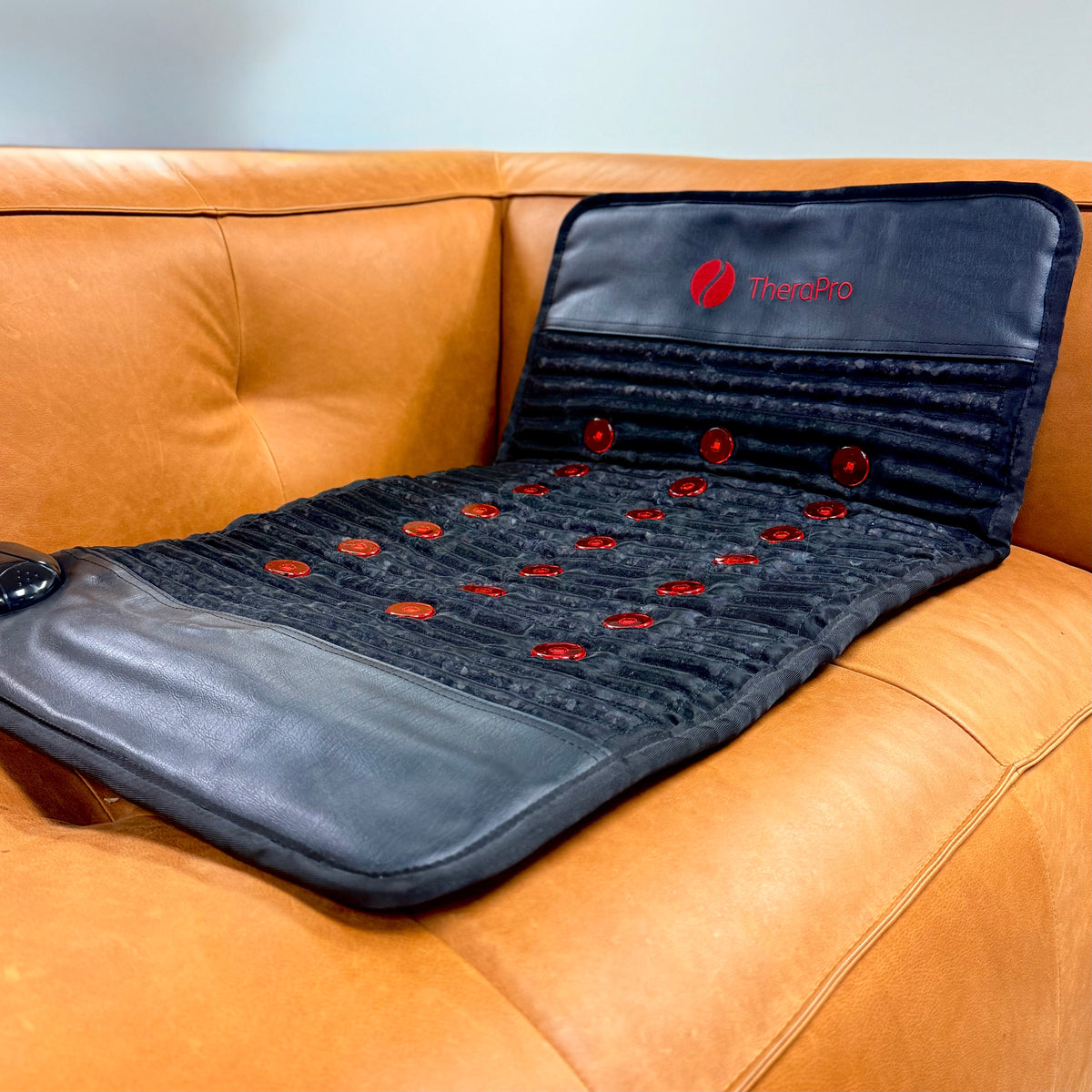
Comfortable warmth can be part of the transition from effort to rest. The current Therasage Healing Pad guides describe full-spectrum infrared heat pads in several sizes, with model-specific setup, session, skin-barrier, and safety instructions. The current TheraPro combines infrared heat with red light, PEMF, TENS, gemstones, and earthing features.
Those descriptions verify the products’ features; they do not prove that a Therasage pad reproduces outcomes from research on massage, compression, or another recovery method. TheraPro is multi-modal, so a personal response cannot identify which component was responsible. Use the exact guide, start conservatively, and do not use comfort as permission to train through an injury.
Know when this is not routine recovery
Seek urgent care for dark tea- or cola-colored urine, severe swelling, profound weakness, fainting, confusion, trouble breathing, or rapidly worsening pain after exercise. These can signal heat illness, rhabdomyolysis, or another condition that needs prompt care.
Have localized sharp pain, joint instability, a sudden pop, major bruising, loss of function, or symptoms that worsen rather than improve assessed. Normal post-workout soreness is usually spread through the worked muscle and follows an unfamiliar or increased load; it should not be used to explain every pain.
Frequently asked questions
Do I need a recovery shake immediately
Usually not. A convenient protein-and-carbohydrate option can be useful, especially when a meal is far away or another session is coming, but total intake and the full day matter. Medical and dietary needs may change the plan.
Is complete rest best for sore muscles
Not always. Gentle movement and ordinary activity may feel helpful, while another hard session for the same tissues may not. Match activity to function and symptoms.
Should I use heat or cold after every workout
No. Neither is mandatory. Choose based on the problem, timing, comfort, and medical context, and follow the device instructions. See original topics 21 and 29 for fuller guidance.
How do I know I am ready to train again
Look at movement, strength, coordination, pain, sleep, and the demands of the planned session. If technique changes because of pain or weakness, lower the load or wait and reassess.
Your next step
Build a four-line recovery note for your next workout: drink, eat, move, sleep. Add one optional comfort method only if it serves a clear purpose. If warmth fits your routine, compare the current Healing Pad guides and TheraPro by size, functions, and safety instructions—not by assuming more modalities guarantee faster recovery.
References
1. Dupuy O et al. An Evidence-Based Approach for Choosing Post-exercise Recovery Techniques. Frontiers in Physiology. 2018;9:403. Systematic review and meta-analysis.
2. Jäger R et al. International Society of Sports Nutrition Position Stand: protein and exercise. Journal of the International Society of Sports Nutrition. 2017;14:20.
3. Walsh NP et al. Sleep and the athlete: narrative review and 2021 expert consensus recommendations. British Journal of Sports Medicine. 2021;55:356–368.
4. Herbert RD et al. Stretching to prevent or reduce muscle soreness after exercise. Cochrane Database of Systematic Reviews. 2011;CD004577.
5. Therasage. TheraPro, Healing Pad and TheraPro user guides. Checked September 18, 2026; product and operating sources only.