

You turn on a heating pad for a sore back and feel the area relax. Twenty minutes pass, then forty. The comfort makes it easy to wonder whether a longer session will work better—or whether it is safe to drift off.
There is no single safe duration for every heating pad. Use the timer, temperature, skin barrier, placement, and session limit in the exact model’s current instructions. Start low, check your skin, stay awake, and stop for burning, persistent redness, mottling, numbness, dizziness, or discomfort. Never assume that an automatic shutoff makes sleeping on a pad safe. Therasage Healing Pad user guides.
The right question is not “How long can anyone use heat?” It is “What does this product permit for this person, body area, and setting?”
Why the number changes
A small electric pad, microwavable pack, moist-heat wrap, infrared gemstone pad, and full-body mat do not deliver heat in the same way. Contact pressure, insulation, starting temperature, body position, pad condition, and room temperature all influence skin exposure.
Risk also changes with the user. Reduced sensation can make heat damage harder to detect. Limited mobility can make it difficult to move away. Thin or fragile skin, poor circulation, acute illness, alcohol or sedating medication, and cognitive impairment may increase risk.
That is why a timer printed in a general article should never overrule the manual for the device in front of you.
A safer session starts before power on
Inspect the pad, cable, plug, controller, and connector. Do not use a device with fraying, exposed wiring, scorch marks, a loose connection, unusual odor, or uneven heating. Confirm the required voltage and keep the pad dry.
Position it as instructed. Do not fold or overlap a pad unless the guide specifically permits that configuration. Do not trap an ordinary pad under your body, sit on it, or place heavy bedding over it unless the product is designed and approved for that use; pressure and insulation can concentrate heat.
Use the specified cover or barrier. Avoid combining heat with topical pain creams, patches, liniments, or ointments unless both manufacturers explicitly allow it, because heat can change absorption or raise burn risk.
During the session low awake and observable
Begin at the lowest comfortable setting. Check the skin rather than waiting for pain. Healthy skin can still burn, and heat injury may develop gradually. Stop for persistent redness, blotchy or net-like discoloration, blistering, burning, increased pain, or loss of sensation.
Stay awake and able to respond. An automatic shutoff is a backup feature, not permission to sleep. If you are drowsy, have used alcohol, or take medicine that makes you sleepy, postpone the session.
Do not assume that maximum temperature plus maximum time provides maximum benefit. A heat session should make ordinary movement easier or provide comfort—not test endurance.
What current Therasage guides say
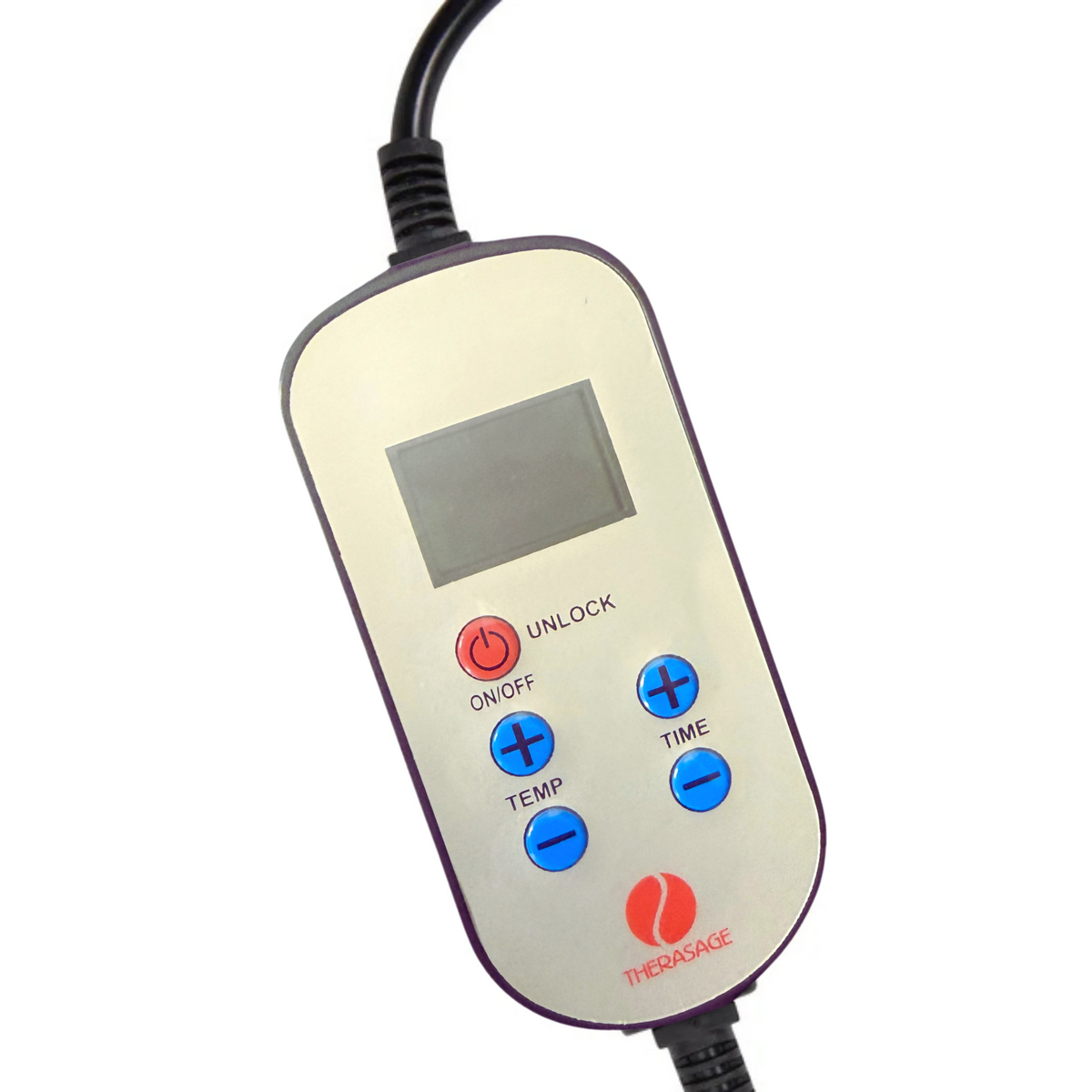
The current Healing Pad Mini Square and Small guides, updated December 2025, instruct users to:
- keep a thin cloth or towel between the jade stones and skin;
- start at lower heat and increase gradually;
- limit initial sessions to 30–60 minutes;
- avoid exceeding 60 minutes during the first two weeks unless directed by a healthcare provider;
- avoid folding or overlapping the pad;
- avoid use while sleeping or lying face-down for an extended period;
- stop and seek guidance for overheating, dizziness, or discomfort.
The Mini Square guide lists an 8 by 10 inch format, 45 watts, and a controller with a six-hour countdown timer. The six-hour timer does not cancel the guide’s initial 30–60 minute session advice or its instruction not to sleep on the pad.
The current TheraPro guide covers a different, multi-modal product with separate heat, red-light, PEMF, and TENS controls. TENS must never be used while sleeping, and implanted electronic devices, pregnancy, and other conditions require special attention. Do not borrow a duration or setting from one Therasage model for another.
Who should ask before using heat
Talk with a healthcare professional before use if you have reduced temperature sensation, neuropathy, diabetes, circulation problems, open wounds, active skin disease, pregnancy, a significant heart or blood-pressure condition, or an implanted electronic device. Follow the product’s own contraindications; a heat-only pad and a pad that also provides PEMF or TENS do not have identical risks.
Children, frail older adults, and anyone unable to communicate discomfort or move the pad independently need particular caution and may not be appropriate users.
Do not apply heat over a suspected blood clot, active bleeding, newly injured area with significant swelling, or a hot red joint without medical guidance.
Can repeated heat change the skin
Yes. Repeated low-level heat exposure can cause a mottled, net-like discoloration called erythema ab igne, sometimes known as “toasted skin syndrome.” The area may not blister or feel like an obvious burn. Persistent discoloration is a reason to stop heat and have the skin assessed.
This is one reason to avoid making a heating pad a background surface for hours every day. Use it for a defined purpose, inspect the area, and reassess whether the underlying problem needs treatment.
After use
Turn the pad off, unplug it if directed, and let it cool on a safe surface. Clean only as the manual specifies; water and household cleaners can damage electrical components. Store it without sharp bends, compression, moisture, or objects that could puncture the surface.
If heat only briefly covers worsening pain, or you need progressively hotter or longer sessions, seek an assessment. Comfort should support a plan, not delay one.
Frequently asked questions
Is 20 minutes the universal limit
No. Many general recommendations use short sessions, but products vary. The exact guide, heat setting, body area, skin response, and your health determine the appropriate duration.
Can I sleep with a heating pad if it shuts off
Only if the exact product is explicitly designed and instructed for sleep. The current Therasage Healing Pad Mini Square and Small guides say not to use those pads while sleeping. Automatic shutoff alone does not make sleep use safe.
Can I lie on top of a heating pad
Not unless the manufacturer explicitly permits it. Body weight can trap heat, damage the pad, or create uneven hot spots. The Therasage Healing Pad guides also advise against lying face-down on the pad for extended periods.
Why does my skin look mottled after frequent heat
Repeated heat can produce erythema ab igne. Stop exposing the area and ask a clinician or dermatologist to examine persistent color or texture changes.
Your next step
Find the model name on your pad and read its current guide before the next session. Write down the starting setting, required barrier, allowed position, and session limit. For current Therasage products, use the official user-guide page and contact Therasage support when your controller or manual does not match the online guide. If sensation is impaired or skin has changed, pause and seek professional advice.
References
1. Therasage. Healing Pad Mini Square and Small user guides. Updated December 2025; checked September 18, 2026.
2. Therasage. TheraPro user guide. Version 1.2, updated March 2026; checked September 18, 2026.
3. DermNet. Erythema ab igne. Clinical overview of repeated heat exposure, skin changes, and when persistent lesions require assessment.
4. NHS. Arthritis. Reviewed January 19, 2026; joint warning signs.