

Your lower back tightens after lifting a box, sitting through a long drive, or waking from an awkward night. Heat sounds simple: plug in a pad, find a comfortable position, and wait for the muscles to let go. But simple does not mean risk-free, and not every back problem is a good home-treatment experiment.
Superficial heat can provide short-term relief for some adults with acute or subacute nonradicular low back pain. Use a heating pad according to its instructions, keep the heat comfortable rather than intense, stay awake and able to monitor your skin, and pair relief with a gradual return to normal movement. Heat does not identify the cause or treat every type of back pain. American College of Physicians guideline summary.
Warmth can be a helpful part of a difficult day. It should create room to move, not encourage you to ignore a warning sign.
What heat may do and what the evidence measured
Superficial heat warms the skin and nearby tissues, can make an area feel less guarded, and may temporarily reduce pain. That experience can make walking, changing position, or beginning prescribed movement feel more approachable.
The American College of Physicians recommends superficial heat as one non-drug option for acute or subacute nonradicular low back pain. “Nonradicular” matters: the guideline was not establishing heat as a treatment for nerve-root symptoms, spinal cord problems, fractures, infection, cancer, or every cause of sciatica. The evidence review focused on clinical outcomes such as pain and function, not proof that heat repaired a disc or corrected posture.
The ACP also emphasizes that acute and subacute low back pain often improves over time. That natural course makes it important not to credit a pad with structural healing that was never measured.
A heating pad is a comfort tool not a diagnostic test
Back pain may arise from a muscle strain, joint irritation, nerve involvement, kidney or abdominal disease, infection, fracture, or other causes. A warm sensation cannot distinguish among them. If heat feels good, that does not prove the problem is muscular.
Seek urgent medical help for new loss of bladder or bowel control, numbness around the groin or saddle area, progressive leg weakness, severe pain after major trauma, fever with back pain, or back pain with unexplained weight loss or a history that raises concern for cancer or infection. Call 911 in the United States for back pain accompanied by chest pressure, severe breathing difficulty, fainting, or other emergency symptoms.
If pain shoots below the knee, causes new numbness or weakness, repeatedly wakes you, or is worsening rather than settling, contact a clinician. A device should not postpone an assessment you need.
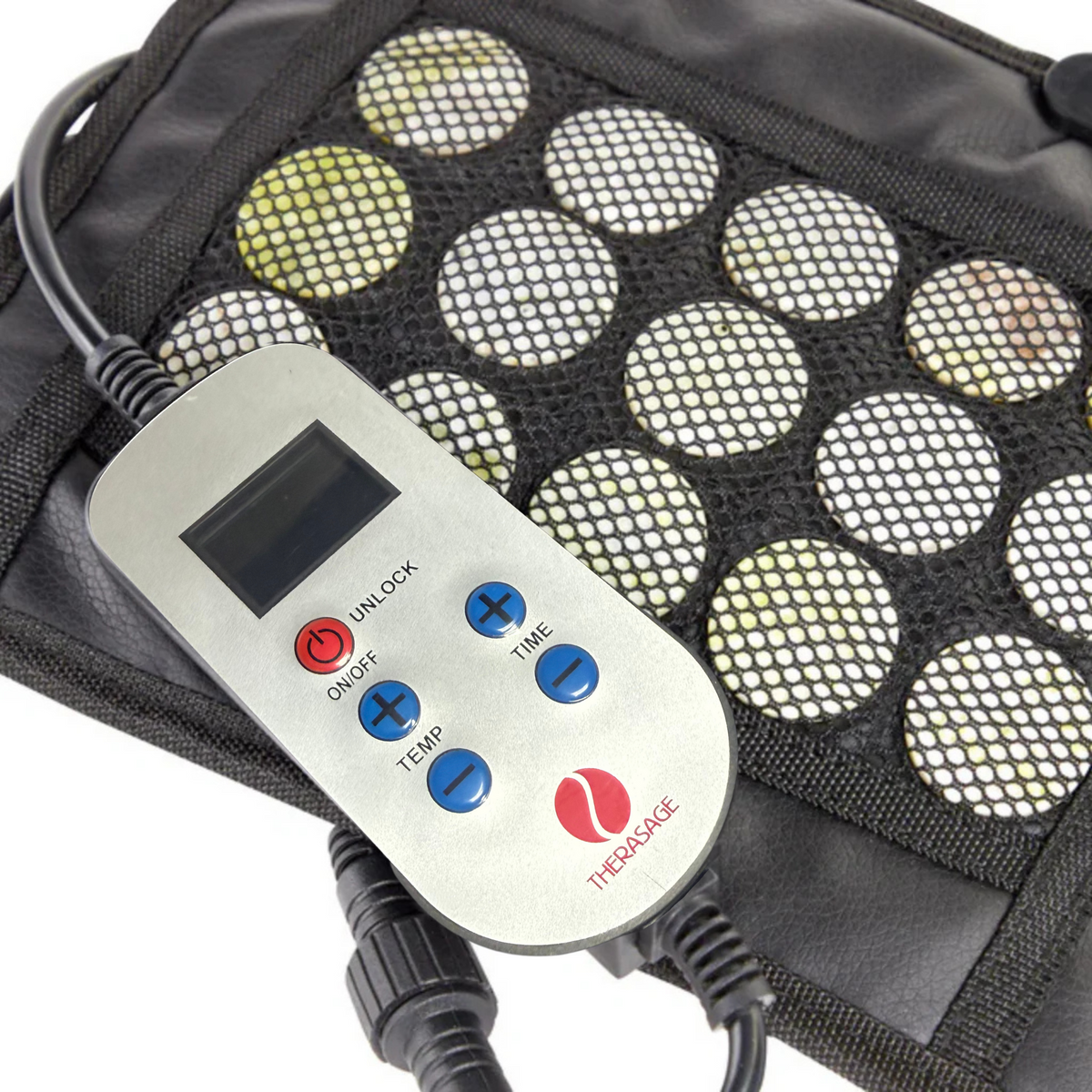
Set up a safer heat session
Read the manual before using any electrical, microwavable, or infrared pad. Check the surface, cord, controller, cover, and connectors for damage. Do not fold a device unless the manufacturer explicitly designed it for that use, and do not pin it tightly beneath your body if the instructions prohibit pressure or trapped heat.
Choose the lowest comfortable setting first. Place the pad as directed, with any required cover or barrier. Set a timer and stay awake. Inspect your skin during and after use. Persistent redness, mottling, pain, blistering, or numbness means stop.
Avoid sleeping with a heating pad unless the exact product is specifically designed and instructed for that use. Even then, medical factors can change suitability. When you are asleep, sedated, or distracted, you may not notice excessive heat soon enough.
Some people need extra caution
Reduced sensation can hide a developing burn. Ask a clinician before using heat if you have neuropathy, impaired circulation, diabetes with sensory changes, paralysis, cognitive impairment, fragile skin, or difficulty repositioning yourself. Do not apply heat over an infected area, active bleeding, a fresh injury with substantial swelling, or skin that is already damaged unless a clinician directs you.
Pregnancy, recent surgery, implanted electronic devices, and complex medical conditions may require product-specific guidance. A multi-modality pad that includes electrical stimulation or PEMF has different contraindications from a heat-only pad.
Children and people who cannot reliably communicate discomfort should not use a heating pad without appropriate professional and caregiver guidance.
Use the relief to re enter the day
Once warmth makes movement more comfortable, try a short walk or a few gentle position changes within your tolerance. The goal is not to stretch aggressively while tissues feel warm. It is to avoid getting stuck in one guarded position for the rest of the day.
For ongoing low back pain, exercise and rehabilitation may matter more than repeated passive relief. The ACP guideline recommends several active and behavioral approaches for chronic nonradicular low back pain. A physical therapist can tailor movement to your symptoms, work demands, and goals.
Keep a small note of what happened before the pain, what the heat changed, and what movement you could do afterward. “Pain fell from 6 to 4 for an hour and I could walk comfortably” is useful. “The heat healed my back” is a conclusion the observation cannot support.
What an infrared pad changes
An infrared heating pad and a conventional electric pad may produce warmth differently, but evidence that superficial heat helps some acute or subacute low back pain does not prove that infrared heat is clinically superior. That comparison is covered separately in original topic 23.
The current TheraPro page describes a multi-modality pad that combines full-spectrum infrared heat with red light, PEMF, TENS, gemstones, and earthing features. Because several modalities are present, a user experience cannot reveal which component produced a change. The ACP superficial-heat recommendation is not a trial of TheraPro.
Follow the TheraPro guide and its contraindications, especially around pregnancy, pacemakers, and electronic implants. Do not apply general heating-pad advice to its TENS or PEMF functions.
Frequently asked questions
How hot should a heating pad feel
Comfortably warm, not intensely hot. Begin with the lowest practical setting and follow the manual. Pain, burning, or persistent redness is not a therapeutic target.
Can I lie on top of the pad
Only if the manufacturer explicitly allows that position. Body weight can trap heat or damage some pads. Check the exact product instructions rather than assuming.
Is heat good for sciatica
Heat may feel soothing, but sciatica-like symptoms can involve nerve irritation and need their own assessment. The ACP recommendation cited here concerns nonradicular low back pain and should not be expanded to every radiating symptom.
Can I use a heating pad every day
Frequency depends on the product, skin response, diagnosis, and health factors. Daily comfort use is not proof that an underlying condition is improving. Persistent pain deserves a broader plan.
Your next step
If your back discomfort has no warning signs and heat is appropriate for you, plan one monitored session using the lowest comfortable setting and exact manual. Then use the easier window for a gentle walk or prescribed movement. If you are considering a multi-modality infrared option, review the current TheraPro features and warnings and ask Therasage about operation; ask a clinician whether heat, TENS, PEMF, or red light fits your condition.
References
1. Qaseem A et al. Noninvasive Treatments for Acute, Subacute, and Chronic Low Back Pain. Annals of Internal Medicine. 2017;166:514–530. ACP clinical practice guideline.
2. American College of Physicians. Guideline summary for nonradicular low back pain. February 14, 2017.
3. MedlinePlus. Back pain. General diagnosis and treatment context.
4. Therasage. TheraPro and user guides. Checked September 18, 2026; product and operating sources only.