

You stand up after a long drive or finish an afternoon in the garden, and your lower back makes itself known. Someone recommends ice. Someone else tells you to reach for a heating pad.
It is a common question because back discomfort has many causes, and the same approach does not suit every situation.
Heat can help some forms of lower-back discomfort, especially when stiffness or muscle spasm is part of the picture. Ice may provide temporary comfort when soreness comes with swelling. Neither option diagnoses the cause, and new or concerning symptoms need assessment. NHS back-pain guidance.
Start with your symptoms
Before choosing a pack or pad, consider what changed. Did discomfort appear after an unfamiliar activity? Has it been recurring for weeks? Does it travel down a leg? Are there symptoms beyond the painful area?
The point is not to diagnose yourself. It is to avoid treating every back problem as ordinary muscle soreness.
Seek emergency care for back pain with new loss of bladder or bowel control, numbness around the groin, significant weakness or numbness in both legs, chest pain, or a serious accident. Severe pain that starts suddenly, worsens quickly, or comes with fever or feeling unwell warrants urgent medical advice. NHS warning signs.
If discomfort is persistent, recurrent, or disrupting daily activities, arrange an assessment rather than repeatedly changing home treatments.
What evidence supports heat
The American College of Physicians includes superficial heat among initial nondrug options for acute or subacute low back pain that is not due to nerve-root involvement. That recommendation is specific to the type of back pain being considered. ACP guideline.
A Cochrane review found evidence of small, short-term improvements with heat wraps in some people with acute or subacute low back pain. Evidence for cold was insufficient to draw firm conclusions. The review is older, which matters when interpreting its place in the evidence. French and colleagues, 2006.
These findings support a measured expectation: heat may be a comfort tool for an appropriate situation. They do not mean it repairs every cause of pain or makes medical assessment unnecessary.
When might ice feel useful
A wrapped cold pack is one option for temporary symptom relief, particularly when swelling is part of the concern. Its usefulness for your symptoms is not proof that a specific injury has been identified or treated.
Avoid the idea that a simple calendar rule determines the answer for every back problem. “Ice first, heat later” may be too general for someone whose symptoms are unexplained or whose condition differs from a straightforward strain.
If you are unsure what happened, or if either approach worsens the symptoms, seek advice.
Protect your skin
Use products according to their directions, including any required covering or barrier, temperature setting, and session limit. Do not apply an ice pack directly to bare skin or assume that a higher heat setting will produce a better result.
Heat can cause burns, particularly with excessive exposure. A narrative review of superficial heat discusses risks and circumstances requiring extra caution. Review of superficial heat in low back pain.
Do not fall asleep with an ordinary heating pad or cold pack in use. If you have reduced sensation, circulation problems, or difficulty judging temperature, get individualized guidance before using either. Avoid combining heat with topical pain products unless their instructions explicitly permit it.
Judge comfort by function
After an appropriate comfort measure, ask a practical question: can you move a little more comfortably during normal activities?
A temporary reduction in pain should not become permission to push through a heavy task that continues to aggravate your back. Equally, ordinary movement does not have to disappear from your day. NHS guidance encourages staying active as tolerated rather than prolonged bed rest. Back-pain self-care.
Make the next activity manageable. You might change position, take a gentle walk, or break a task into smaller parts, depending on your symptoms and any clinical advice. Stop an exercise that makes pain worse.
A practical decision guide
Situation |
Sensible next step |
|---|---|
Familiar mild stiffness without concerning symptoms |
Consider a properly used heat option and comfortable movement |
Soreness with swelling after an activity |
A wrapped cold pack may offer comfort; assess unexplained or significant injury |
Symptoms worsen with either approach |
Stop and seek advice |
Pain keeps returning or limits daily activities |
Arrange an assessment and a longer-term plan |
Neurological warning signs or serious injury |
Seek urgent or emergency care as appropriate |
This guide helps organize your next step. It cannot determine the cause of your pain.
Choosing a heat option for home
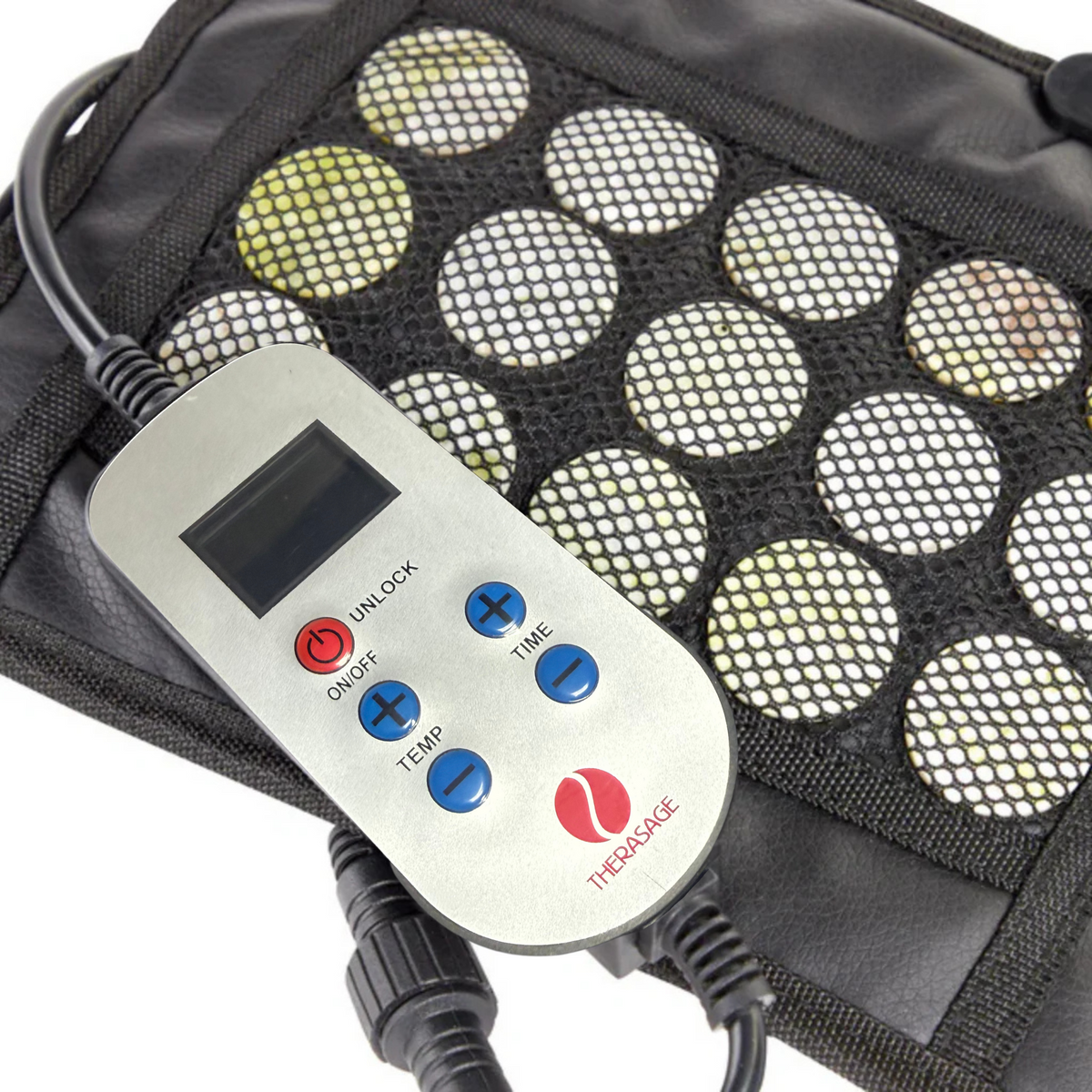
If heat is appropriate, look for a pad that is comfortable to position and has clear controls and instructions. Compare the usable area, permitted positions, timer, and care requirements.
Therasage offers infrared heating pads. You can explore those options as part of a comfort routine, while recognizing that evidence for superficial heat does not automatically prove a specific pad is superior or suitable for every condition.
Frequently asked questions
Is heat always better than ice for back pain
No. The cause, symptoms, individual response, and medical context matter. Research supports heat for some forms of short-term low back pain, but no one approach fits every case.
Can I alternate heat and ice
You do not need an alternating routine to make home care more effective. If a clinician recommends one, follow the specific guidance and protect your skin during each exposure.
What if pain goes down my leg
Radiating symptoms may need a different assessment from local stiffness. Seek medical advice, especially with weakness, numbness, or worsening symptoms; emergency warning signs require immediate care.
Should I stay in bed until the discomfort stops
Prolonged bed rest is generally discouraged for ordinary back pain. Ask for advice on appropriate activity if the pain is severe or the cause is unclear.
You deserve support that helps you feel more comfortable and understand what your body needs. Thank you for taking the time to make an informed choice.
References
1. NHS. Back pain: self-care and warning signs. Reviewed March 2026.
2. American College of Physicians. Guideline for nonradicular low back pain. 2017.
3. French SD, et al. Superficial heat or cold for low back pain. Cochrane. 2006.
4. A Role for Superficial Heat Therapy in the Management of Non-Specific, Mild-to-Moderate Low Back Pain. Narrative review. 2021.